Alleppey Day Cruise with Older Parents: What to Confirm Before Booking
Start with the actual boarding approach, seating and toilet access. Choose the boat and duration around your family’s practical needs.
Published · Alleppey Day Cruise
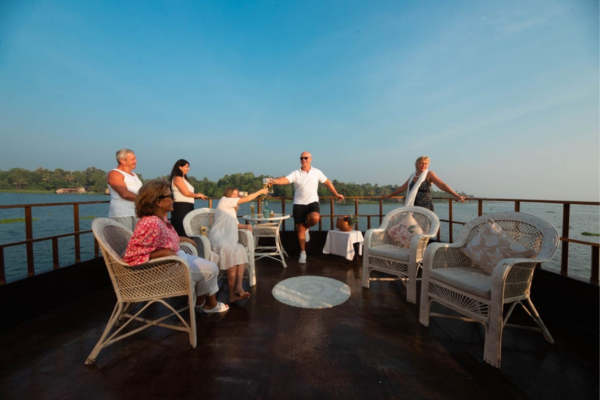
Can older parents join a day cruise?
An Alleppey day cruise may suit older parents when the actual boat, boarding approach and facilities meet their needs. Start with the practical requirements: how far they can walk, which steps they can manage, where they will sit, and how easily they can reach a toilet.
A useful booking answer describes the assigned boat and jetty. Request photos or video of the complete access route before choosing.
Check the journey from the car to the seat
There can be several parts to boarding: the walk from the car, movement along the jetty, the crossing onto the boat, and steps inside. Ask the operator to show all of them rather than only sending a picture of the lounge. Our houseboat boarding-point guide explains the arrival details to request.
If a parent finds high steps difficult, explain that directly. Ask about step height, handholds, the crossing surface and the support available from staff. If they use a walking aid or wheelchair, give its dimensions and ask how it will be accommodated.
Confirm the return arrangement too. A convenient start is only part of the trip if the pickup point or boarding conditions differ at the end.
Choose facilities around the actual need
A comfortable place to sit
Ask for photos of the seating your group will use. Consider back support, how easily someone can stand up, space for the group, and whether a shaded place remains available throughout the cruise.
A usable toilet
Confirm which toilet day guests may use and the route to it. Find out whether it involves a bedroom, a narrow doorway, steps or a raised threshold. The presence of a toilet somewhere aboard does not answer whether your parent can comfortably reach and use it.
Cooling and rest
If a cooled place to sit or a room to rest in is important, request it explicitly. Check daytime bedroom and lounge AC access and the hours cooling operates for your package.
What the official standards can tell you
If an operator relies on an approval badge, check the classification claim for the assigned houseboat separately from your parent’s actual access requirements.
Kerala Tourism’s houseboat classification checklist includes handrails, first-aid equipment and attached toilets. It also lists accessibility provisions such as ramps and suitable toilets, with requirements varying across classification categories.
The checklist is useful context when discussing facilities. It does not establish that a particular boat, day-use package or boarding jetty meets your family’s needs. Request the current details for the vessel you will actually use.
Houseboat or shikara?
A houseboat day cruise can make sense when an onboard meal, more indoor space or a confirmed toilet is important. A custom shikara ride can make sense when you want a smaller boat and a shorter ride with a departure that fits the day.
Use the houseboat-versus-shikara comparison to compare the specific vessels and access arrangements. A smaller boat is not automatically easier to board, and a larger boat is not automatically step-free. For a shikara, ask whether a toilet or a suitable comfort stop is available and what the stop involves.
A private rather than shared day-cruise booking may help when your group needs its own guest space or an agreed meal arrangement. If a parent needs vegetarian food, settle the menu and vegetarian preparation requirements in that agreement. On a shared departure, clarify seating, toilet access and how the fixed timetable fits your family.
Choose a manageable duration and transfer
Use the cruise timing advice to think about the whole outing, including road travel and waiting at the jetty. A long drive followed by several hours afloat can be a different proposition from a cruise starting near your hotel.
Ask how much of the booked time is cruising or stopped, whether breaks are possible, and whether an earlier return can be arranged. If you want flexibility, have the limits agreed before booking rather than relying on an informal promise to change the plan later.
Bring the personal items your parent normally uses for a day away from home. For any individual medical concern, follow their clinician’s advice and discuss the practical requirement with the operator.
Send one clear enquiry
If a break means getting off for a walk, check the shore-stop landing and walking plan as well as the boat. Access at an intermediate stop needs its own discussion.
“We would like a day cruise for our family. One guest can walk only a short distance and finds high steps difficult. Please send a video from car drop-off to the boat seating, show the toilet access, and confirm shade, any daytime cooling, the meal plan and start/return times.”
Adapt that message to the actual need. Ask the operator to confirm the assigned boat, boarding point, group total and cancellation terms in the same reply. If a boat substitution occurs, have the access and facilities checked again.
For a mixed-age group, combine this access checklist with our guide to planning a houseboat outing with children.
Our compact day-cruise bag checklist can help you keep personal essentials accessible throughout the outing.
Source checked on 13 October 2026: Kerala Tourism’s houseboat classification checklist. This guide provides practical booking questions; it does not certify any boat’s accessibility or give an individual suitability assessment.